
 See Our Latest Article on HelloNation

Active families often balance school, work, sports, outdoor recreation, household tasks, and seasonal activities. Chiropractic care may support that lifestyle by addressing certain musculoskeletal problems, improving movement, and helping people understand how daily habits affect the back, neck, joints, and muscles.
It is not a substitute for emergency care, medical diagnosis, strength training, rest, or rehabilitation. Its role is best understood as one part of a broader approach to staying active safely.
What can chiropractic care do for an active family?
Chiropractic care commonly focuses on the musculoskeletal system, including the spine, joints, muscles, and related movement patterns. Depending on the person’s condition, care may include a health history, physical examination, manual therapy, mobility guidance, exercise recommendations, or advice about activity modification.
For adults with certain types of low-back pain, spinal manipulation may provide modest improvements in pain and function. Research does not show that it is the right treatment for every condition, and results can vary from person to person. ([nccih.nih.gov](https://www.nccih.nih.gov/health/spinal-manipulation-what-you-need-to-know?utm_source=openai))
For an active household, possible goals may include:
- Reducing discomfort that interferes with walking, lifting, recreation, or sleep
- Restoring comfortable movement after a minor strain or period of inactivity
- Identifying habits that contribute to recurring soreness
- Supporting a gradual return to normal activity after a musculoskeletal problem
- Coordinating care with other clinicians when symptoms require a different type of evaluation
The focus should be on function rather than the idea that the spine must be “put back into place.” Human bodies naturally move asymmetrically, and occasional stiffness does not automatically mean that a joint is damaged or misaligned.
Which family members might benefit?
Adults may seek care for activity-related low-back soreness, neck discomfort from desk work, stiffness after driving, or pain that develops after lifting, gardening, home maintenance, or exercise.
Older adults may have different priorities, such as maintaining comfortable walking, balance, strength, and independence. Manual treatment may be considered only after a careful review of medical history, medications, bone health, and fall risk.
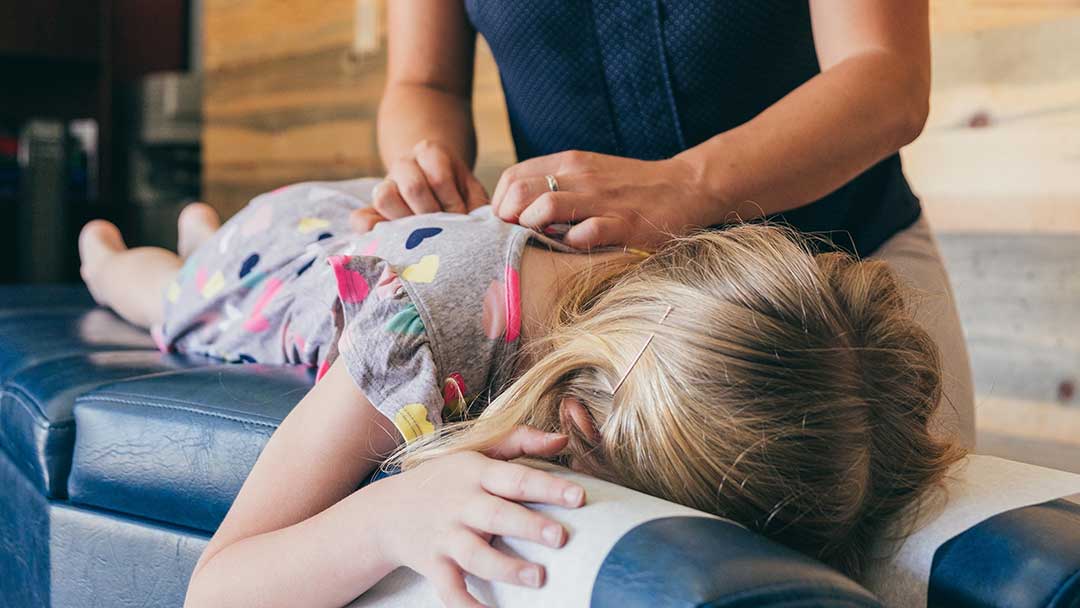
Children and teenagers require additional caution. Their bodies are still developing, and pain may be related to training volume, growth, technique, footwear, equipment, or an injury that needs medical assessment. Evidence about spinal manipulation in children is more limited than evidence for adults, so treatment should be age-appropriate, clearly explained, and based on a specific reason rather than a routine assumption. ([nccih.nih.gov](https://www.nccih.nih.gov/health/tips/things-to-know-about-mind-and-body-practices-for-children-and-teens?utm_source=openai))
A child with persistent pain, swelling, weakness, numbness, limping, reduced athletic performance, or pain that wakes them at night should be evaluated medically rather than treated as an ordinary muscle ache.
How does chiropractic care fit with exercise?
Chiropractic care works best as a complement to movement, not as a replacement for it. Federal activity guidelines recommend that adults obtain at least 150 minutes of moderate-intensity activity each week and perform muscle-strengthening activities on at least two days. Children and adolescents ages 6 through 17 are generally advised to get at least 60 minutes of moderate-to-vigorous activity each day, including aerobic, muscle-strengthening, and bone-strengthening activities. ([cdc.gov](https://www.cdc.gov/physical-activity/php/guidelines-recommendations/index.html?utm_source=openai))
A practical plan may combine:
- Walking, cycling, swimming, or other low-impact aerobic activity
- Strength exercises that match a person’s age and ability
- Mobility work for areas that feel restricted
- Gradual increases in duration, intensity, or training frequency
- Rest days and adequate sleep
- Technique changes for lifting, running, throwing, or repetitive tasks
If symptoms improve temporarily after treatment but return whenever normal activity resumes, the underlying issue may involve strength, endurance, workload, recovery, or movement habits. Those factors deserve attention instead of relying on repeated passive treatment alone.
What should Brunswick households consider throughout the year?
Seasonal routines can change the physical demands placed on the body. In colder months, people may spend more time sitting, carrying supplies, shoveling, or walking on uneven or slippery surfaces. The combination of cold muscles, sudden exertion, and awkward footing can increase the chance of a strain or fall.
During warmer months, households may spend more time hiking, gardening, cycling, playing outdoor sports, or doing home projects. A person who is active only occasionally may attempt several hours of work or recreation without the conditioning needed for that workload.
Useful precautions include:
- Warm up with several minutes of easy movement before vigorous activity
- Increase activity gradually after a sedentary period
- Use proper lifting technique and divide heavy loads into smaller portions
- Alternate demanding tasks with short recovery periods
- Wear activity-appropriate footwear
- Pay attention to heat, hydration, icy surfaces, and uneven ground
- Stop when pain becomes sharp, progressively worse, or associated with weakness or altered sensation
The goal is not to avoid activity. It is to match activity demands with preparation and recovery.
Is chiropractic care appropriate after a sports injury?
It depends on the injury. Mild muscle soreness or uncomplicated mechanical back pain may be managed with movement modification and conservative care. A significant injury may require imaging, urgent evaluation, physical therapy, or treatment from another medical clinician.
Immediate medical attention is warranted for symptoms such as:
- Loss of consciousness or suspected head injury
- Severe neck or back pain after a collision or fall
- New weakness, numbness, or loss of coordination
- Loss of bladder or bowel control
- Inability to bear weight
- Major swelling, deformity, or suspected fracture
- Fever, unexplained weight loss, or severe pain unrelated to activity
Neck manipulation deserves particular discussion. Mild, temporary soreness or stiffness can occur after spinal manipulation, while serious complications are very rare. Reports of cervical artery dissection have created ongoing concern, and the relationship between manipulation and these events remains uncertain. Anyone considering neck treatment should disclose relevant medical conditions, recent trauma, medications, and unusual symptoms beforehand. ([nccih.nih.gov](https://www.nccih.nih.gov/health/spinal-manipulation-what-you-need-to-know?utm_source=openai))
How can families judge whether care is helping?
Improvement should be measured by meaningful function: walking farther, sleeping better, lifting safely, returning to practice, or completing daily tasks with less limitation. A clear care plan should explain the suspected problem, expected time frame, home activities, and signs that require reassessment.
Families should be cautious of claims that chiropractic care can treat unrelated diseases, prevent every injury, or replace necessary medical care. A responsible approach recognizes limits, communicates with other members of a person’s healthcare team when appropriate, and changes course when symptoms do not improve.
For active households, the most durable results usually come from combining sensible training, gradual workload changes, recovery, injury awareness, and appropriate evaluation. Chiropractic care may have a role for selected musculoskeletal concerns, but it should fit within that larger framework rather than stand alone.
