
 See Our Latest Article on HelloNation
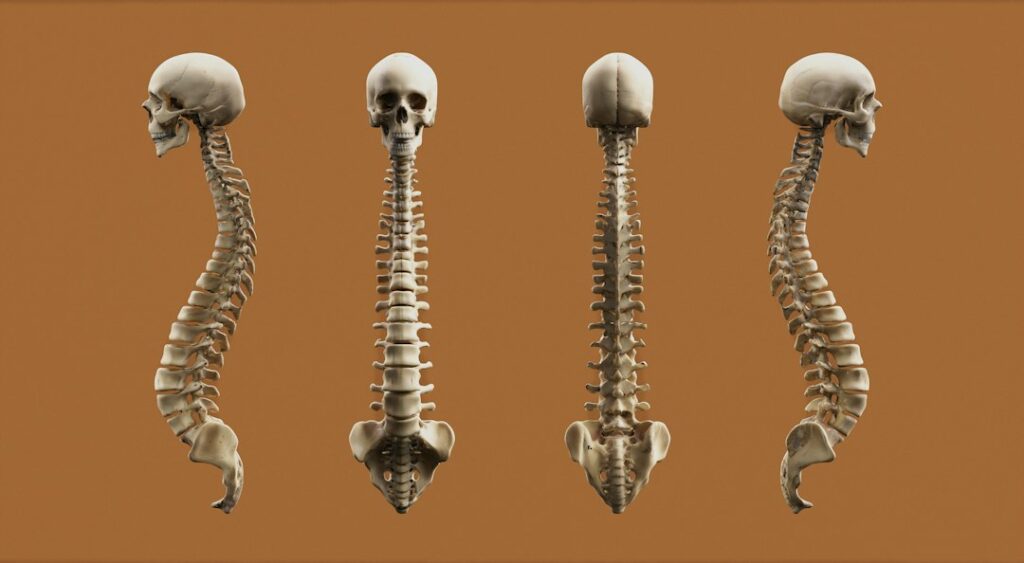
Scoliosis is a sideways curve and rotation of the spine that can develop during childhood, adolescence, or adulthood. Chiropractic care may help some people manage related pain, stiffness, or movement limitations, but current evidence does not show that spinal adjustments can reliably straighten a scoliosis curve or prevent it from progressing.
For residents of Brunswick, understanding that distinction can help families choose appropriate care without delaying evaluation, imaging, bracing, exercise-based rehabilitation, or other treatments when those options are indicated.
What is scoliosis?
Scoliosis is more than a forward or backward posture problem. The spine curves from side to side and may also rotate, which can create uneven shoulders, a prominent shoulder blade, an uneven waist, or one hip that appears higher than the other.
The most common form in adolescents is called idiopathic scoliosis, meaning that no single cause has been identified. It often becomes noticeable during a growth spurt. Other types may be related to congenital conditions, neuromuscular disorders, aging-related changes, or differences in leg length.
A mild curve may require only periodic observation. A growing child with a moderate or increasing curve may need bracing. More severe or progressive curves may require evaluation by a spine specialist and, in some cases, surgery.
Can chiropractic care straighten scoliosis?
There is not reliable evidence that chiropractic manipulation permanently corrects the structural curve of scoliosis. Adjustments may change joint motion, muscle tension, or how a person feels temporarily, but that is different from changing the shape of the vertebrae or stopping curve progression.
Research on chiropractic treatment for scoliosis has generally involved small studies, weak comparison groups, or short follow-up periods. The available evidence is not strong enough to consider chiropractic adjustments a replacement for treatments that have demonstrated value, particularly bracing for certain growing adolescents.
This does not mean that every person with scoliosis should avoid chiropractic care. It means the goal should be stated accurately: symptom management and improved function may be reasonable goals, while permanent curve correction should not be promised.
What symptoms might chiropractic care help?
Some people with scoliosis also experience muscular pain, joint stiffness, reduced mobility, or discomfort related to prolonged sitting and standing. Adults may develop additional symptoms from arthritis, disc changes, or spinal stenosis rather than from the curve alone.
A carefully designed treatment plan may include:
- Gentle mobility work
- Soft-tissue techniques
- Exercise instruction
- Strengthening of the trunk, hips, and back
- Advice about lifting, sitting, and sleep positions
- Temporary symptom relief through manual therapy
These approaches are aimed at comfort and physical function. They do not necessarily change the Cobb angle, the measurement used to describe scoliosis on an X-ray.
Pain can also have causes unrelated to scoliosis. A person may attribute every episode of back discomfort to the curve when the actual issue is a strained muscle, hip problem, disc irritation, kidney condition, or another medical concern.
Is spinal manipulation safe with scoliosis?
Spinal manipulation is not automatically unsafe for someone with scoliosis, but it should not be performed without a proper health history and physical assessment. The type, location, force, and purpose of treatment matter.
Temporary soreness, stiffness, or increased discomfort can occur after manipulation. People should share information about osteoporosis, fractures, inflammatory arthritis, cancer, blood-clotting problems, neurological symptoms, recent surgery, pregnancy, and all current medications before treatment.
Forceful techniques may be inappropriate in some circumstances. Extra caution is also needed for children and teenagers, people with severe or rapidly changing curves, and anyone with unexplained pain.
A responsible plan should avoid claims that an adjustment will “realign” a permanently curved spine or eliminate the need for medical monitoring.
What should children and teenagers with scoliosis do?
A child or teenager with a suspected curve should receive an appropriate evaluation rather than relying only on posture advice or manual treatment. Assessment may include a physical examination and, when indicated, standing spinal X-rays.
Monitoring is especially important during growth because a curve can change as the skeleton matures. Treatment decisions depend on factors such as:
- The size and location of the curve
- The child’s age and remaining growth
- Whether the curve is changing over time
- Pain, weakness, numbness, or breathing concerns
- The presence of another underlying condition
For some adolescents, bracing can reduce the chance of significant progression. Scoliosis-specific exercises may also be used as part of a broader plan, but they should not be presented as a substitute for bracing when bracing has been recommended.
What about adults with scoliosis?
Adult scoliosis may be longstanding or may develop through age-related changes in the discs and joints. Treatment is often directed toward pain, walking tolerance, strength, balance, and daily activities rather than making the spine perfectly straight.
Chiropractic care may be considered as one component of conservative management when the symptoms are mechanical and no warning signs are present. Exercise, physical therapy, medication guidance, activity modification, and medical evaluation may also be appropriate.

A new curve in adulthood, rapidly worsening pain, or symptoms involving the legs deserve medical attention. Adult scoliosis can sometimes be associated with nerve compression or narrowing around the spinal canal.
When should someone seek prompt medical evaluation?
Back pain with scoliosis should not automatically be treated as a routine muscle problem. Prompt evaluation is appropriate for:
- New weakness, numbness, or tingling in an arm or leg
- Difficulty walking or repeated falls
- Loss of bladder or bowel control
- Numbness around the groin or inner thighs
- Fever, unexplained weight loss, or severe nighttime pain
- Pain after a significant fall or collision
- A rapidly changing spinal appearance
- Shortness of breath associated with a severe curve
- Persistent pain in a child or teenager
For families managing winter conditions in Brunswick, lifting snow equipment, carrying wet gear, and slipping on icy surfaces can aggravate back symptoms. Safe lifting, avoiding sudden twisting, and taking breaks during outdoor work may reduce strain, but these habits do not treat the underlying curve.
How should a person judge whether chiropractic care is appropriate?
Start by identifying the objective. Relief of muscular discomfort and improved movement are different goals from correcting scoliosis. Ask how progress will be measured and what findings would lead to imaging, referral, or a change in treatment.
A sound care plan should:
- Recognize scoliosis as a three-dimensional structural condition
- Review previous imaging and medical history
- Use gentle, individualized techniques when appropriate
- Include exercises or activity guidance when useful
- Avoid guarantees of curve correction
- Coordinate with medical or spine care when the curve is progressing
- Reassess if symptoms worsen or fail to improve
The practical answer is that chiropractic care may help selected symptoms associated with scoliosis, especially stiffness or musculoskeletal pain, but it has not been established as a treatment that straightens the spine or prevents progression. The safest approach is coordinated care based on the person’s age, curve pattern, growth status, symptoms, and overall health.
